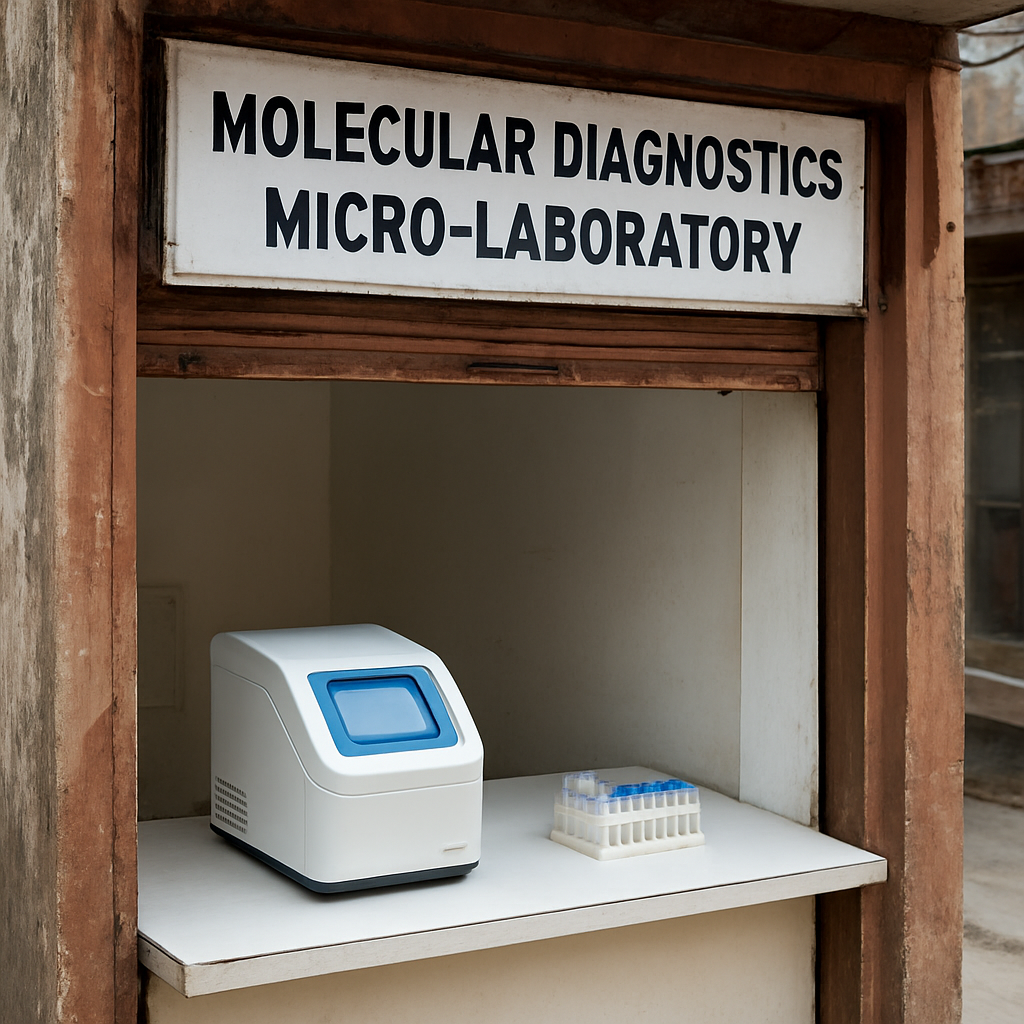
Live · Sangam Vihar, Delhi
Hyperlocal Micro-Lab
A small-footprint node inside the community it serves. Walk-in testing, results in under an hour, priced for the neighborhood.

National infrastructure · A safety net for 1.4 billion
A nation builds roads, power and water to keep its people alive.We are building the infrastructure that keeps them healthy —a safety net for 1.4 billion.
We are building it — a national network of molecular nodes that returns a syndromic PCR result in under one hour, with TB-with-drug-resistance capped at ₹749 nationwide, and feeds every anonymised result into a real-time, pathogen-level surveillance layer aligned to NCDC's IDSP. Catch disease early. Guide the right treatment. Watch over 1.4 billion.
Right diagnosis. Right antibiotic. First time.
TB is a matter of national security. The diagnostic gap fuels an antimicrobial-resistance crisis — and a country that sees symptoms but not pathogens cannot get ahead of its outbreaks.
India carries 25% of the world's TB burden and 32% of its multidrug-resistant TB — a public-health and economic threat at national scale.
With no fast, affordable answer, antibiotics are prescribed empirically. India is among the world's largest misusers — accelerating antimicrobial resistance.
Just ~9,000 molecular labs for 1.4 billion people. A private test costs ₹3,000 and a confirmed answer can take 30 days.
NCDC / IDSP sees syndromes — fever, cough, diarrhoea — but rarely the pathogen behind them. The country counts symptoms, not the organisms driving outbreaks.
of the world's TB burden carried by India
of the world's MDR-TB is in India
cost of a molecular test in the private market
average delay to a confirmed diagnosis
molecular labs for 1.4 billion people
Thirty days from first symptom to a confirmed answer — each stage compounding cost, transmission and resistance.
Cough, fever, fatigue. Treated symptomatically at a local pharmacy.
A broad-spectrum course is prescribed without a confirmed cause.
Patient returns; a second antibiotic is added. Still no diagnosis.
Sent to a distant facility for a ₹3,000 molecular test.
TB confirmed — a month late, after the disease has spread.
Every node is a different shape of the same infrastructure — sized to the place it serves, connected to the same surveillance backbone.
A small-footprint node inside the community it serves. Walk-in testing, results in under an hour, priced for the neighborhood.
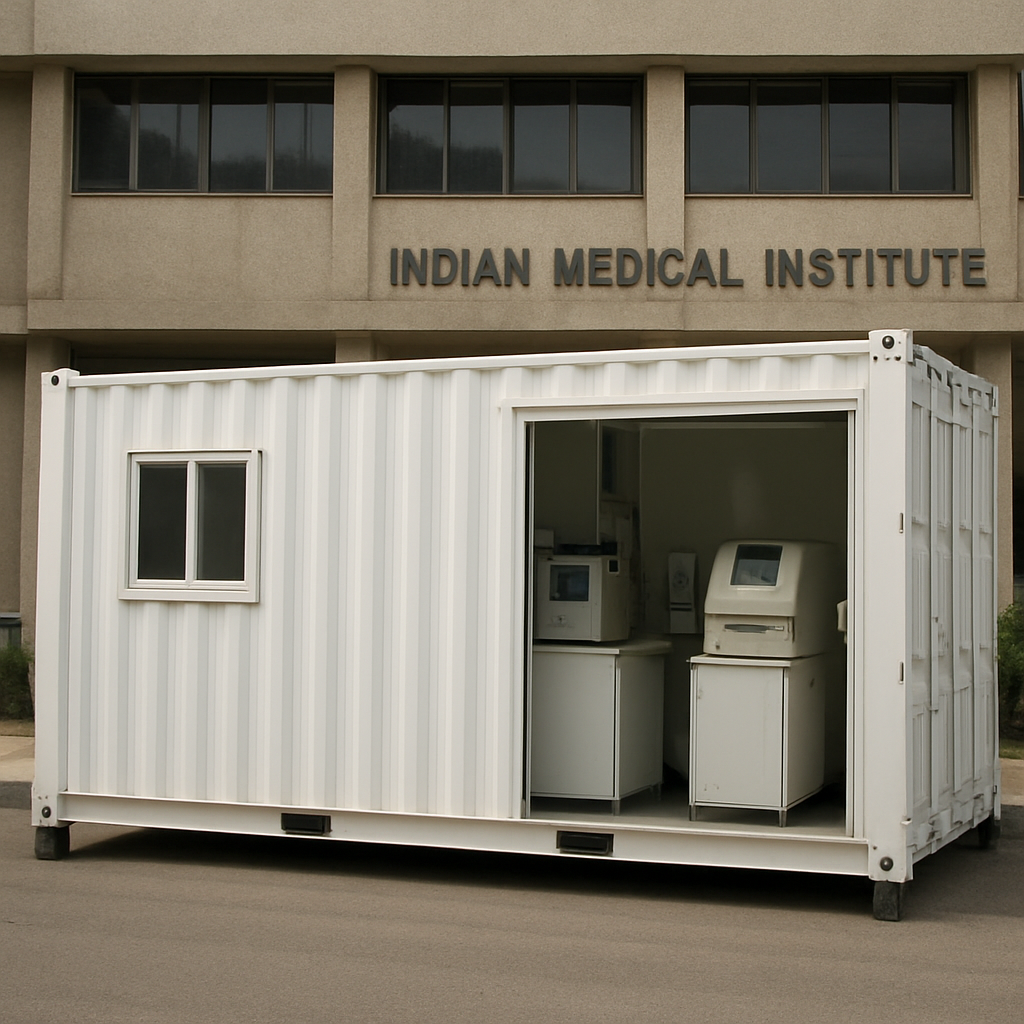
A container-based unit that brings molecular PCR to where there is none — outreach, surge response and last-mile reach.
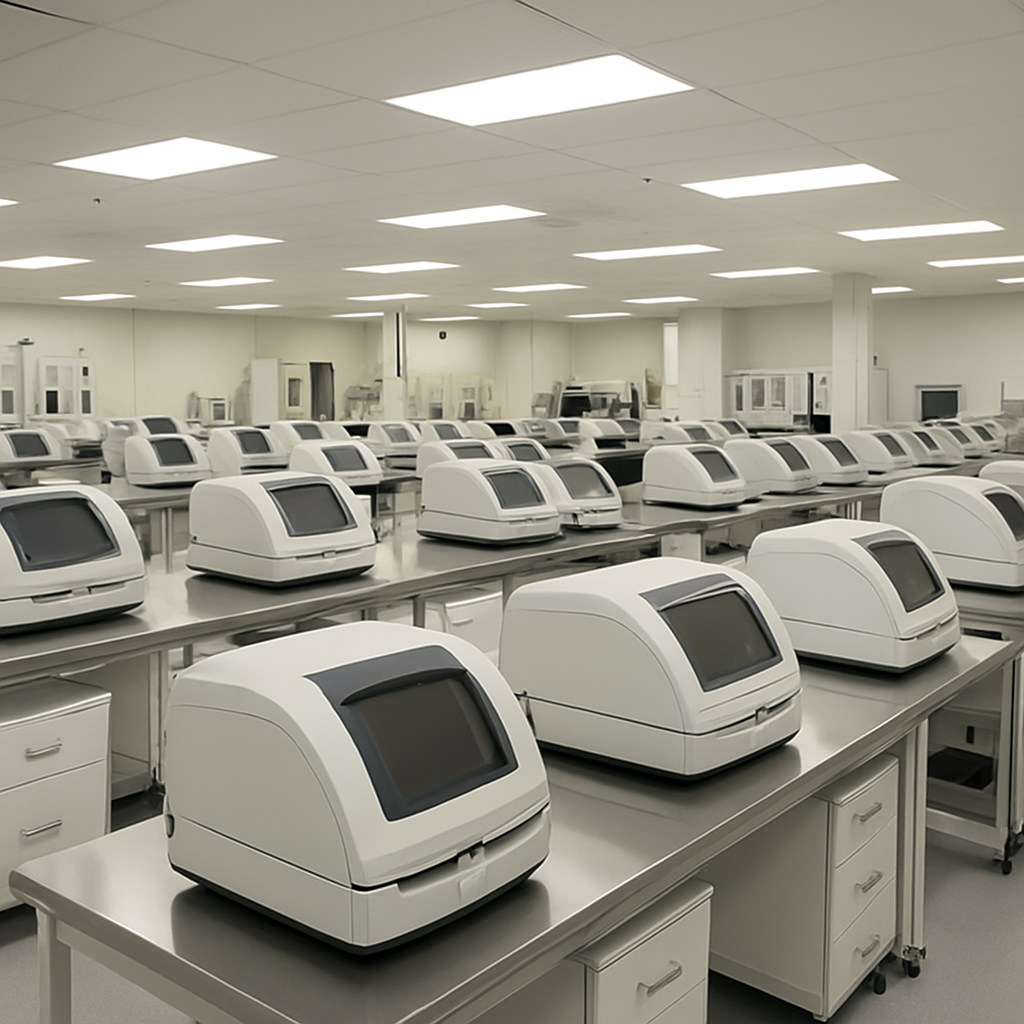
A high-throughput hub anchoring a region: validation, training and the backbone capacity behind the network of nodes.
Three sites are live today — a Center of Excellence in Gurugram, the first Hyperlocal Micro-Lab in Sangam Vihar, and a Mobile unit at NITRD. Each new node lights the map a little brighter.
Operational nodes pulse in coral; planned nodes mark the constellation still to come.
The same node, the same hardware, the same chemistry — a phased rollout where each phase funds the next.
“Same node. Same hardware. Phased pipeline. One grant seeds three phases.”
Every empirical antibiotic prescribed without a diagnosis is a small contribution to the resistance crisis. A confirmed answer replaces the guess — and the unnecessary course.
IVD Yodha treats antimicrobial resistance as co-equal with diagnosis. Every test ends not with a result but with guidance: a consultant advising the right therapy, or the confidence to withhold an antibiotic that was never needed.
Empirical prescribing is replaced by evidence. That is how a diagnostic network becomes a stewardship network.
of antibiotics prescribed in India are estimated to be unnecessary or empirical — issued without a confirmed diagnosis.
is all it takes to turn a guess into a decision — and to keep one more antibiotic course in reserve for when it is truly needed.
The COVID-19 response was the proof of concept for express, affordable molecular diagnostics in India. IVD Yodha is that capability, turned toward the country's endemic burden.
The team engineered an RT-PCR kit at a price point no one else matched — proving affordability and quality are not a trade-off.
The market price of a COVID test fell from ₹4,000 to ₹299 — a correction this team catalysed and the country benefited from.
Inaugurated by Union Home Minister Shri Amit Shah — the precedent for the IVD Yodha Mobile format.
A high-throughput facility processing up to 100,000 samples a day — the backbone capacity behind a national network.
A cross-border collaboration uniting French molecular engineering with Indian manufacturing and clinical validation — the foundation of the CITA platform.
Whoever you are, there is a direct path to building this with us.
Capitalise the build-out of a national diagnostic grid with measurable public-health return.
Fund the networkIntegrate nodes into national TB and surveillance programmes at district scale.
Explore a partnershipDistribute reagents, hardware and node franchises across regions.
Become a partnerRefer patients to a node and receive syndromic results with therapy guidance.
Connect a clinicJoin the hybrid employee-entrepreneur workforce running and growing nodes.
See open rolesCoverage, data and interviews on India's diagnostic infrastructure.
Press enquiriesFind your nearest operational node and what each panel costs.
Find a node